
Free self-check · 2 minutes
Quran Reading Level Test: Where Should Your Child Start?
Seven quick questions about what your child can read today suggest the stage to start at, from the first Arabic letters to Hifz, and how many lessons a week usually suit it.
The short answer
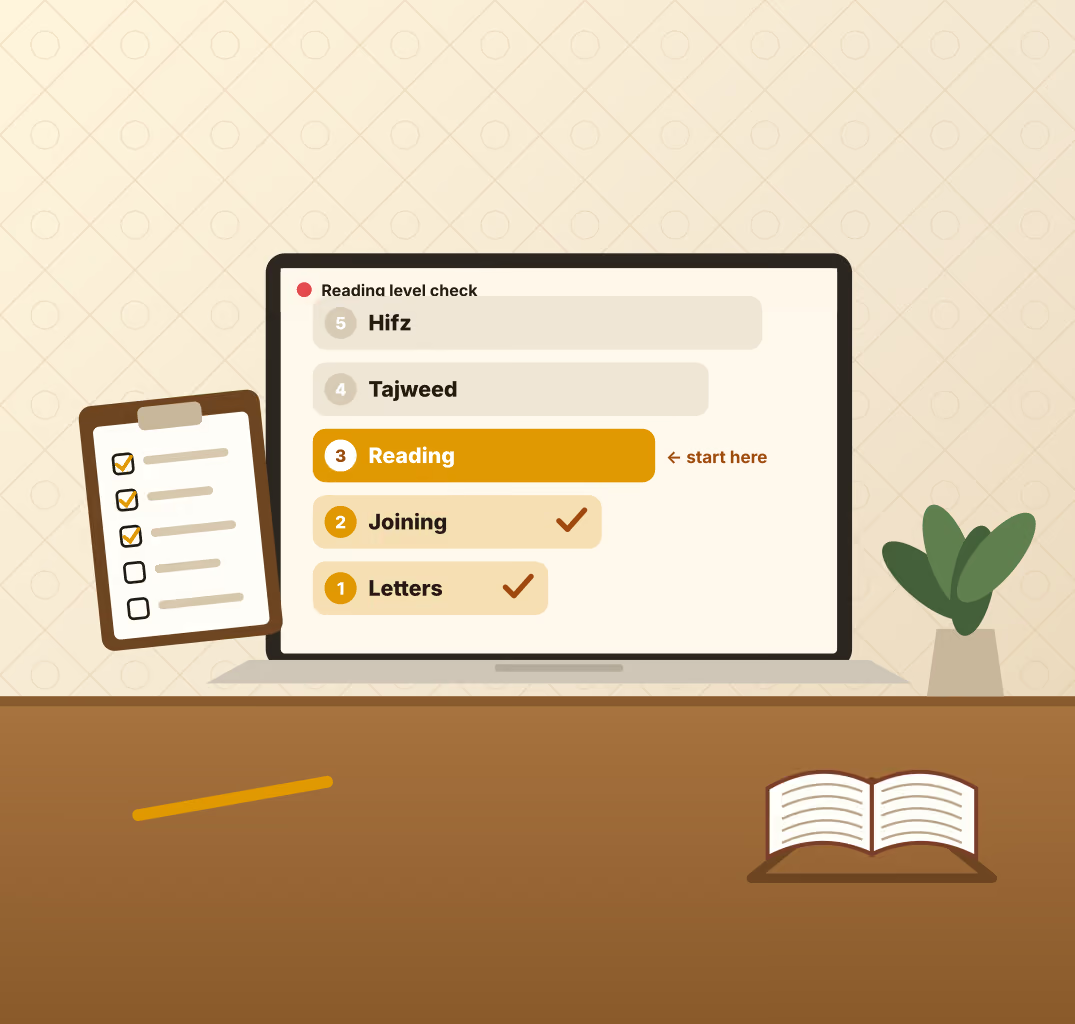
Most children start at one of five stages: the letters, joining letters with their vowels, reading from the Quran, Tajweed, or Hifz. The test below places your child in one of them from seven answers about what they can do now, not their age.
It is a guide. In the first free class the teacher listens to your child read for a few minutes and confirms the level before planning anything, so nobody is pushed into a book that is too hard or held back on one that is too easy.
- Time
- About two minutes, seven questions
- For
- Children from 4, teenagers and adults
- Result
- A starting stage, lessons a week and the matching course
- Then
- Up to 3 Free Trial Classes, where the teacher confirms the level
- Price
- Plans from $39 a month for two lessons a week
Two minutes
Take the Quran reading level test
Answer for the person who will be learning. If it is your child, think about the last time you heard them read rather than what their madrasa book says; children are often a page ahead on paper and a page behind out loud. The test doesn’t send your answers to us unless you book.
Answer the seven questions to see a suggested starting stage.
Book a free trial at your level
Up to 3 free trial classes. No card needed. We confirm the time on WhatsApp.
From first letter to Hifz
What are the stages of learning to read the Quran?
There are five, and each one depends on the one before it. Skipping a stage rarely saves time: a child who memorises before they can read tends to guess at words, and a reader who never learnt Tajweed has habits to unlearn later.
- LettersEvery letter recognised by shape and sounded from the right place.
- Joining and vowelsLetters joined into words, read with fatha, kasra, damma and sukoon.
- Reading the QuranSteady reading from the mushaf itself, mistakes corrected as they happen.
- TajweedThe rules applied: noon and meem, madd, qalqalah, clear letters.
- HifzMemorising with daily revision, once reading is accurate.
| Stage | They can already | Next they learn | Course page |
|---|---|---|---|
| Stage 1: letters | Nothing yet, or a few short surahs by ear | The 28 letters by shape and sound | Noorani Qaida |
| Stage 2: joining and vowels | Name every letter on its own | Reading joined words without spelling them out | Noorani Qaida curriculum |
| Stage 3: reading the Quran | Read short words fluently | Reading lines and pages of the mushaf | Quran basics for beginners |
| Stage 4: Tajweed | Read a page without stopping | Reciting by the rules, letter by letter | Tajweed |
| Stage 5: Hifz or advanced | Recite with most rules applied | Memorising with revision, or meaning | Hifz classes |
Five minutes with a book
How can I check my child’s Quran level at home?
Sit beside them with a Qaida or a mushaf and listen, without helping, for five minutes. What they do when they meet a word they don’t know tells you more than any certificate.
Point at six letters at random
Not in alphabet order. If they hesitate on more than one, start at stage 1.
Ask them to read three short words
Try كَتَبَ, قَلَمٌ and مَسْجِدٌ. Spelling out each sound before saying the word means stage 2.
Open the mushaf in the middle of Surah Al-Baqarah
Pick a page they have not memorised. Stopping every few words, or reading from memory instead of the page, means stage 3.
Listen for the long and nasal sounds
Do they stretch the madd and hum the ghunnah, or flatten everything? Flat reading that is otherwise smooth is stage 4.
Ask what they have memorised
A child reading well with Tajweed who already knows Juz Amma is ready to talk about Hifz.
Testing yourself
I am an adult. How do I know where to start?
Many adults find they are at stage 2 or stage 4. Often the letters were learnt as a child and have faded, or reading is fluent and Tajweed was never taught properly. Take the test above for yourself and answer honestly; nobody sees it unless you book.
Learnt as a child, forgotten since
Letters learnt in childhood often come back quickly once lessons restart, and the mushaf follows.
Read fluently, unsure of Tajweed
The work is fixing habits: letters pronounced from the wrong place, madd too short, noon sakinah rushed.
Revert or new to Arabic
Start at the letters with a patient teacher. Our page on Quran classes for new Muslims explains the first months.
Sisters can choose a woman teacher at any stage. More on lesson times and goals for grown-up learners is on online Quran classes for adults.
Beyond the test
What does the free trial class check that a test cannot?
A teacher hears what a questionnaire cannot: how each letter sounds. Two children who both “read smoothly” can be at different stages once someone listens for the throat letters and the heavy ones.
- Settling in (5 min) The teacher says hello, checks the sound and asks what your child already reads.
- Listening (10 min) Your child reads from the Qaida or the mushaf while the teacher notes each slip, without correcting yet.
- A first real lesson (10 min) One small thing taught at the right level, so you see how your child learns with this teacher.
- The plan (5 min) The teacher tells you the stage, what comes next and how many lessons a week would suit.
You can sit beside your child the whole time. A minute-by-minute account of a first class is in what happens in a first online Quran lesson, and what to ask in a free trial class lists the questions worth asking the teacher before you decide.
From level to plan
How many lessons a week does each stage need, and what does it cost?
Two lessons a week suits young children, most teenagers and most adults; three suits children aged 7 to 12 and anyone memorising while their reading improves; Hifz at stage 5 usually means four or five. Every lesson is 30 minutes, one-to-one and live.
| Learner and stage | Lessons a week | Monthly price |
|---|---|---|
| Child aged 4 to 6, any stage | 2 | $39 |
| Child aged 7 to 12, reading, Tajweed or meaning | 3 | $49 |
| Teenager or adult, reading, Tajweed or meaning | 2 | $39 |
| Age 7 and up, memorising before stage 5 | 3 | $49 |
| Adult memorising at stage 5 | 4 | $55 |
| Child aged 7 to 12 or teenager memorising at stage 5 | 5 | $59 |
Not sure about the answers?
Skip the test and let a teacher check the level in up to 3 free trial classes.
Before you book
Which mistakes do parents make when judging the level?
The most common one is moving a child on from Qaida too early because the book is finished. Finishing the pages and reading them fluently are different things.
- Counting memorised surahs as reading. Test on a page they have never learnt.
- Reading from Roman letters or a transliteration. That skips the Arabic and needs undoing later.
- Starting Hifz to keep a bright child busy before their reading is accurate.
- Judging by age. A ten-year-old can be at stage 1 and a six-year-old at stage 3; both are fine.
- Assuming Tajweed is “for later”. The rules start as soon as a child reads the mushaf.
If your child has had a long break, expect them to test a stage lower than where they stopped; it often comes back with steady lessons. Restarting Quran after a break has a plan for the first month back.
Frequently asked questions
Is the Quran level test really free?
Yes. The test is free and needs no sign-up, and the trial classes that follow are free as well: up to 3 free trial classes, with no card and no obligation.
What age is the test for?
Anyone from age 4 up, including adults. For young children a parent answers; teenagers and adults can answer for themselves.
How accurate is an online Quran reading test?
It is a rough guide that relies on your answers. The teacher confirms the level by listening in the first free class.
My child finished the Noorani Qaida. Can they start the Quran?
Only if they can read the last Qaida lessons smoothly without spelling out sounds. If they still stop on most words, a few more weeks of Qaida will make the mushaf much easier.
When is a child ready to start Hifz?
When they read accurately from the mushaf and can sit with a short passage for a few minutes. Short surahs can be memorised earlier by listening. See is my child ready for Hifz.
Do you share my answers with anyone?
No. The test doesn’t send your answers to us unless you book a trial; then they go with your booking, so our team knows the level before the first class.
Can I choose a male or female teacher after the test?
Yes. You choose a male or female teacher at any stage, and you can change teacher later without giving a reason.
What if the test puts my child lower than I expected?
That is common, and the first class will show whether it is right. Starting at the right level makes the next stage easier to reach than months at the wrong one.