Islamic studies for kids: what to teach first
By Zubair Sattar, founder of Online Quran Learnings · Updated · 3 min read
3 Days Free Trial, then from $30 a month · Female supervisor in every class
The short answer
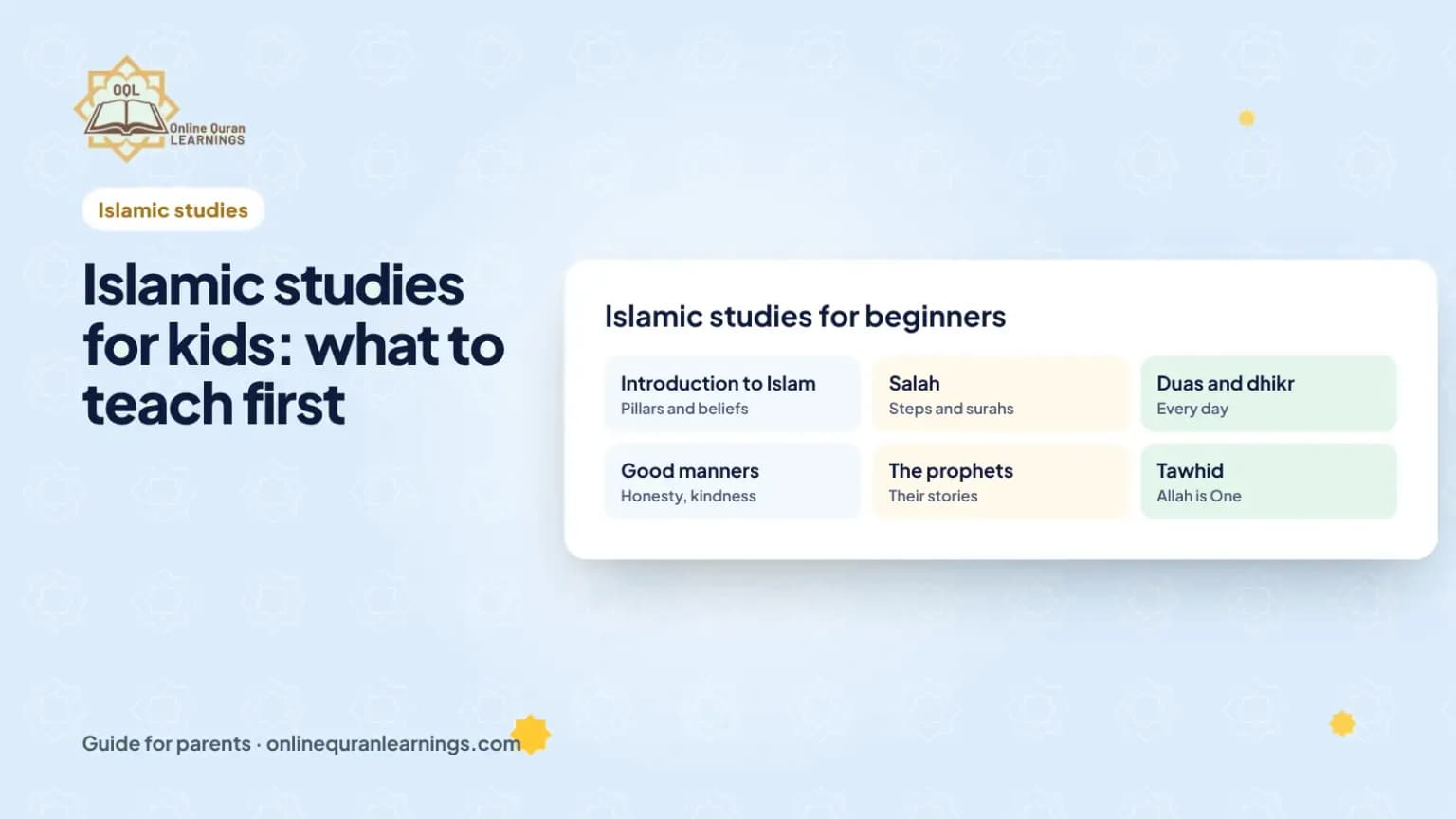
Start with things your child does every day. Teach the first kalima and what it means, then wudu, the actions of salah, and short duas for eating, sleeping and leaving home. Add simple stories of the prophets and good manners. Daily practice comes first, deeper lessons come later.
A simple order to follow
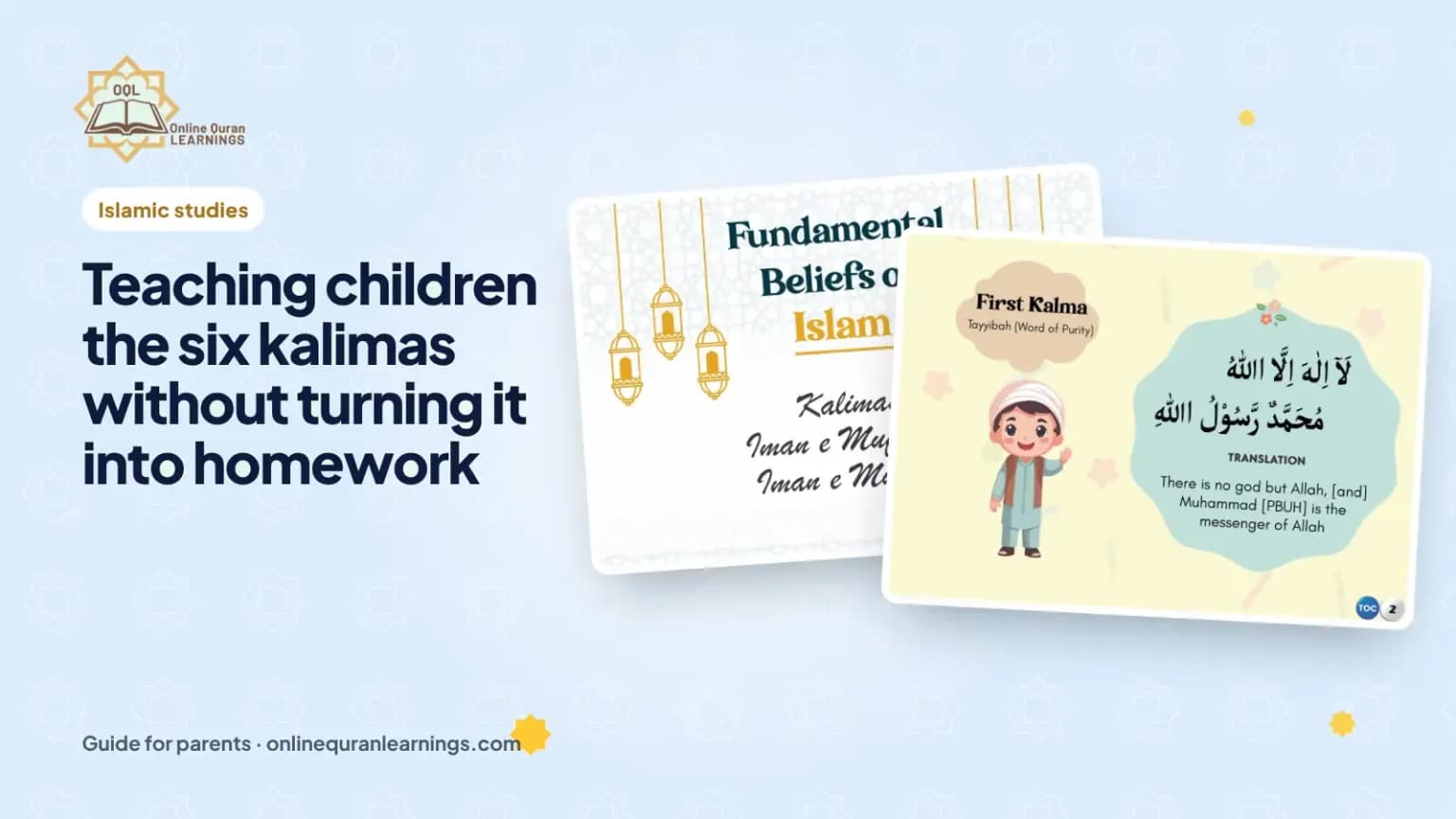
- The first kalimaAnd its meaning.
- Saying salaamAnd “Bismillah” before eating.
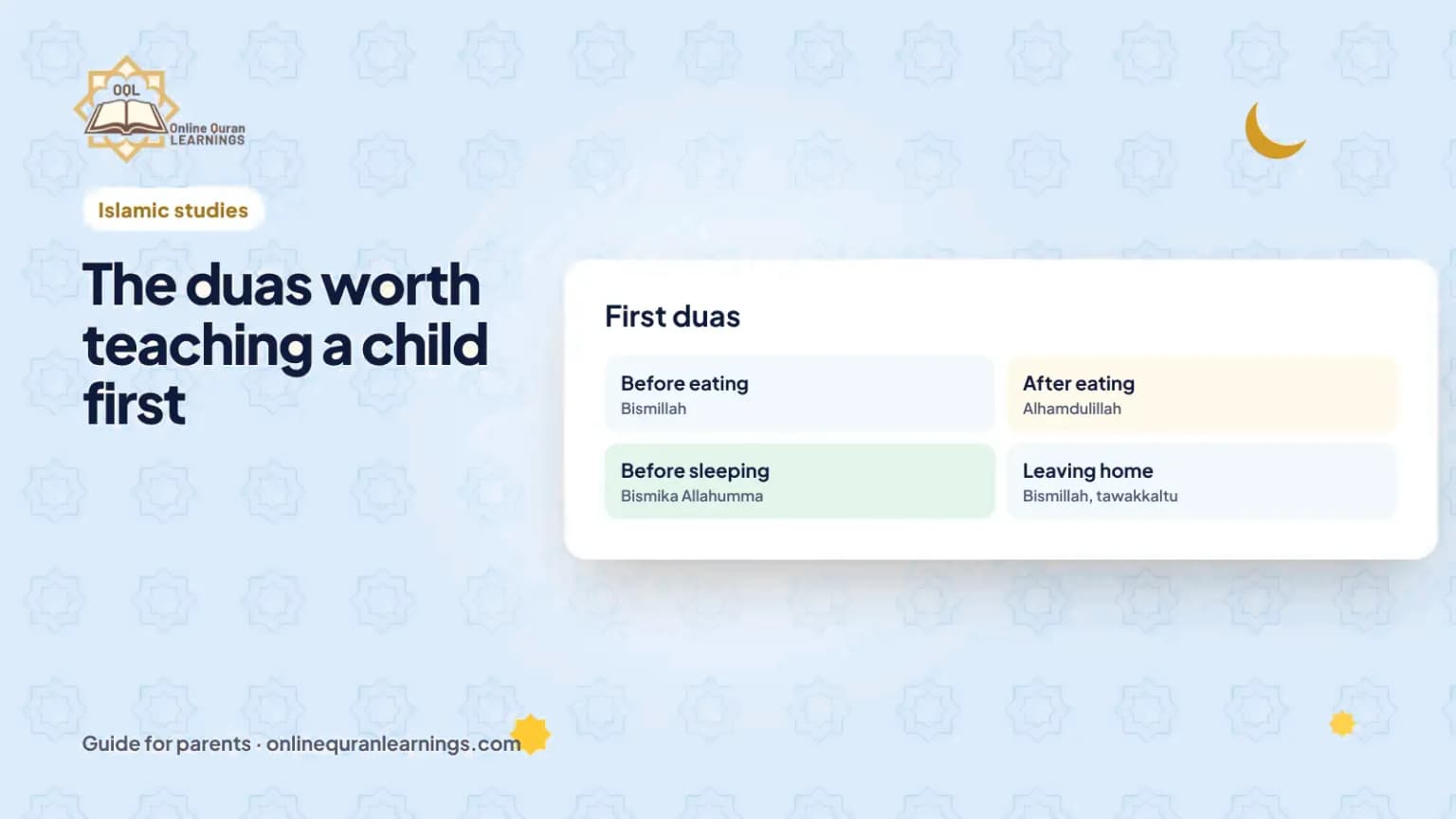
- Short daily duasSee the first duas to teach.
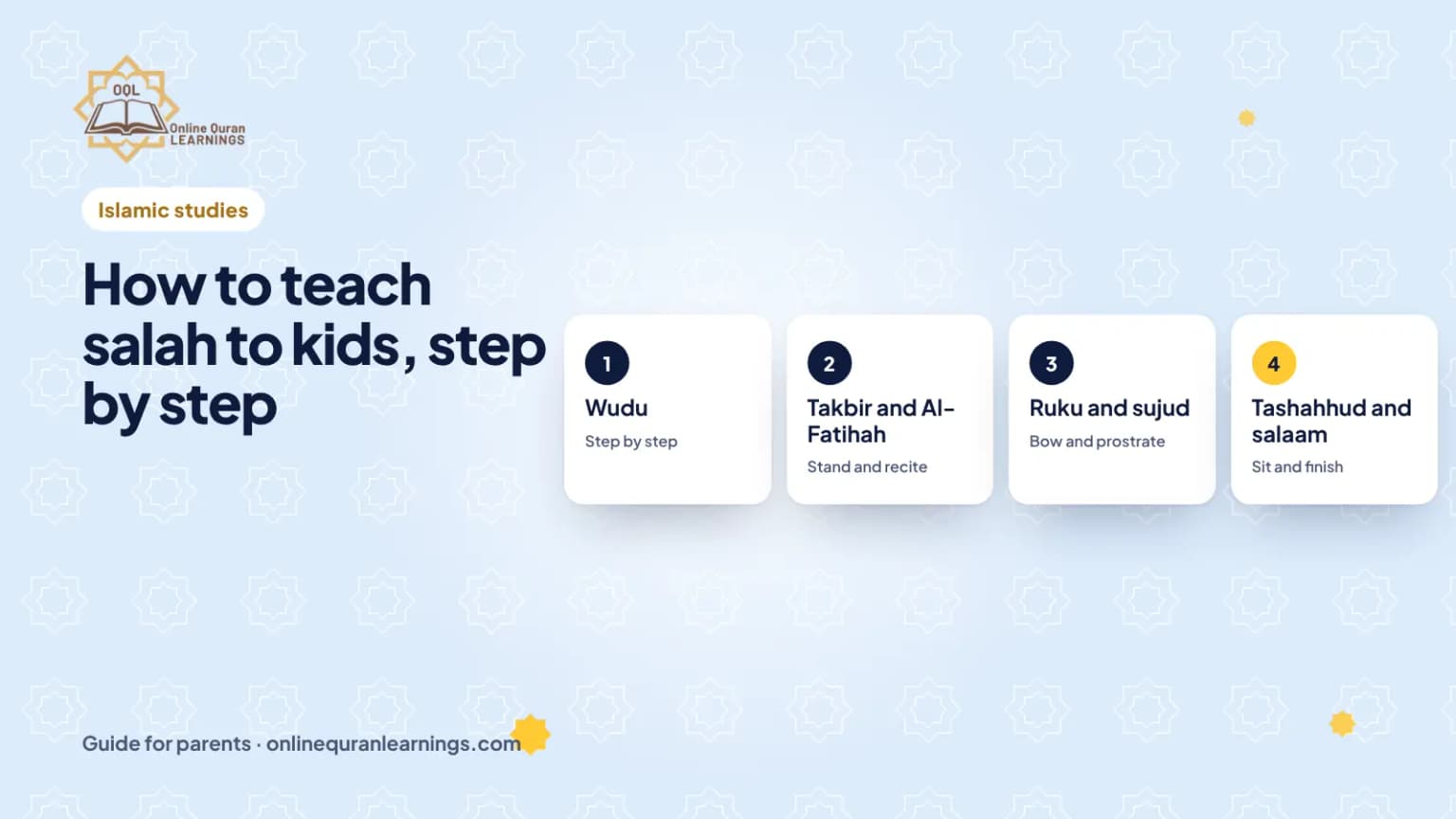
- WuduStep by step.
- Salah actionsThen the words. See how to teach salah.
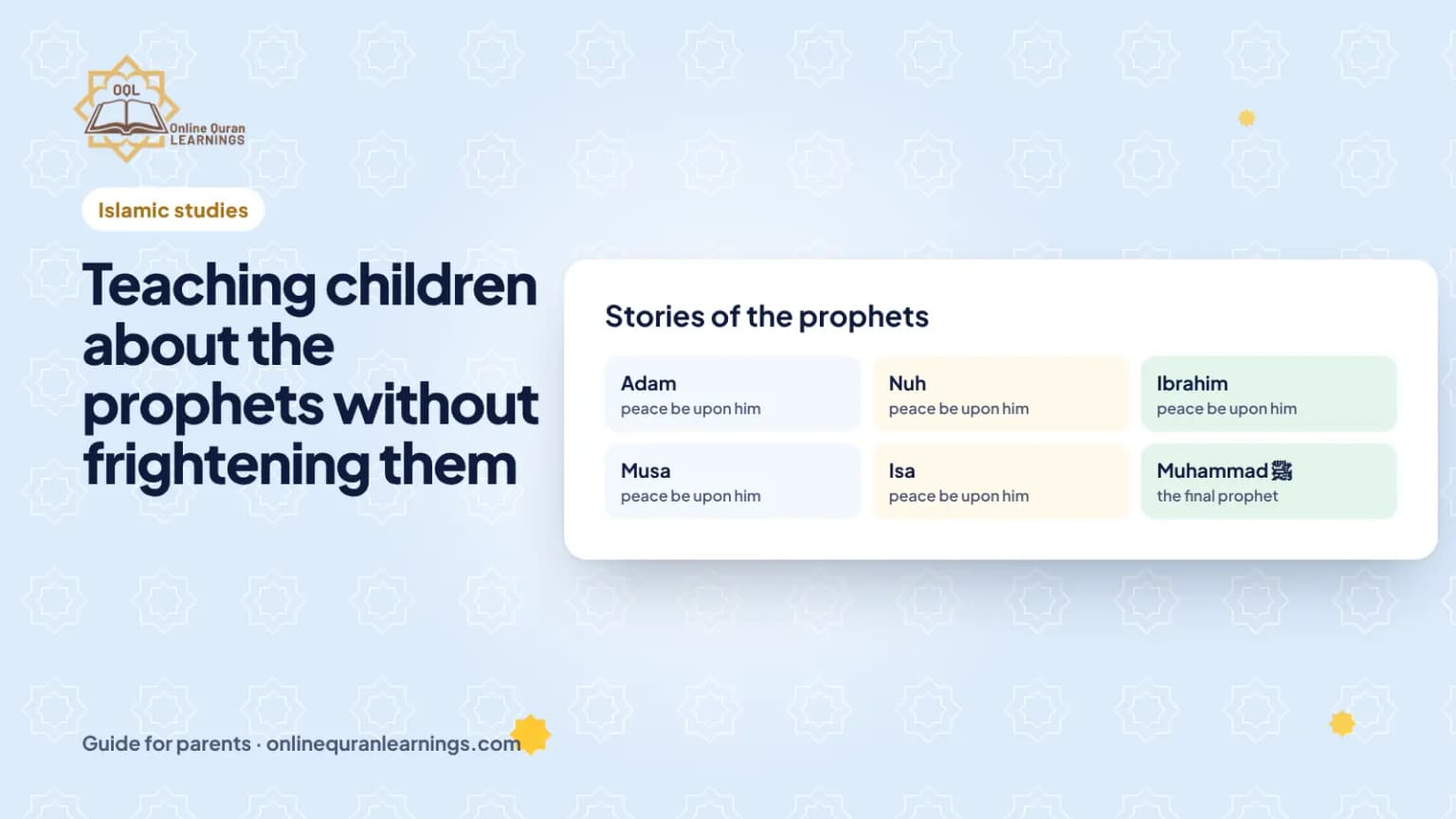
- Stories of the prophetsTold simply.
- The five pillarsAnd the six pillars of Iman.
- Good mannersHonesty, kindness, respect.
Keep it part of daily life
Children remember what they use. A dua before bed, wudu before salah, salaam at the door. Ten minutes of learning means more when it is lived the same day.
Quick questions
What age should Islamic studies start?
From around 4, with simple duas and stories. Wudu and salah usually follow from 6 or 7.
Can my child do Islamic studies and Quran together?
Your child can learn Quran and Islamic studies together in the same 30-minute class, or take just one subject. You choose, and the teacher shapes each lesson around your child.