
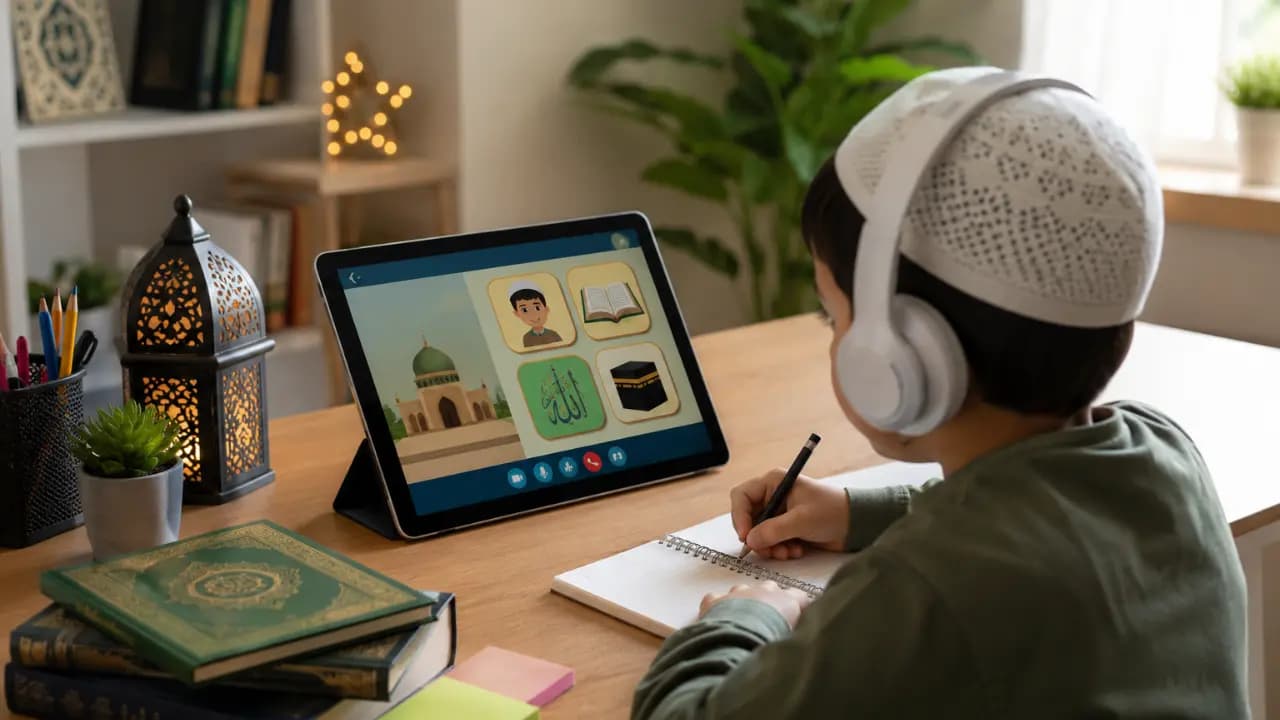
Interactive and flexible online Islamic classes help kids build a strong Quranic foundation while learning Islamic values through stories, activities, and personalized guidance. This approach keeps children engaged and develops a lasting connection with Islam.
1- Build a Strong Foundation with Quran Learning
Before you start making lessons fun for kids they need to know a lot about Islamic Studies. This knowledge should grow slowly. I think it is an idea to start with learning the Quran. This means kids should learn how to read the Quran, remember the Quran, understand what the Quran is saying, learn Tajweed, say the words of the Quran correctly and memorize the Quran, which is called Hifz. When kids learn all these things about the Quran they will feel confident. They can learn new things easily and naturally.
2- Teach Islamic History Through Inspiring Stories
Teaching kids about Islamic history by telling them the stories of the Prophets is a really good way to help them feel connected to their faith. When we share stories about the Prophets, like Prophet Muhammad (PBUH) and the people who lived a long time ago, kids can learn important lessons that will help them in life.
They can also understand what it means to be a Muslim. If we tell these stories in a way that’s easy for kids to understand and then discuss to them about what they mean it can help them learn about their Islamic heritage through meaningful narratives.
This way kids can learn about history and it will not just be a bunch of old stories but something that they can use in their everyday lives and that is what makes it so valuable the stories of the Prophets and the Islamic teachings.
3- Strengthen Aqeedah and Daily Islamic Practice
Kids should learn about Aqeedah and belief little by little. They need to know the Pillars of Faith and the attributes of Allah. This foundation is important before they begin practicing the Pillars of Islam, such as Salah and fasting.
As they learn, teachers can guide them more about Fiqh, Salah and Zakat. They can also teach them about Akhlaq and how to behave appropriately. kids need to learn about acts of worship and practice accordingly each day.
Teachers can use life to help kids understand. For example, they can teach them what to say before they eat or before they go on a trip. This way kids can practically apply what they learn in their lives, and it will be fun for them to learn about Islam.
4- Use Storytelling to Bring Lessons to Life
I think that using stories is a beneficial way to teach kids about Islamic studies when they are learning online. I have observed that when we tell kids stories about the Prophets and their sahaba and about what happened in Islamic history, it really helps them learn important things. These stories make them think and use their imagination.
Instead of relying only on memorization or long explanations, teachers can use storytelling, illustrations, animations, and interactive discussions to make online lessons more engaging. When children connect with a story emotionally, they understand Islamic teachings more naturally instead of seeing them as rules. This approach develops their interest in learning, improves long-term memory, and makes Islamic studies both meaningful and enjoyable.
When kids really care about the stories they are hearing, they start to understand what is important in Islam, in a way that makes sense to them. They do not just see the rules as something they have to do. They really get what they mean. This way of teaching really helps kids develop interest in learning. They remember what they learned for a long time after the lesson is over. Islamic studies become something that’s a part of them because they learned it in a way that was fun and meaningful. Storytelling is a way to bring Islamic studies to life and make it something that kids love to learn about.
5- Encourage Active Participation Instead of Passive Learning
Children learn more effectively when they actively participate rather than simply listening to a lesson. Interactive online learning encourages them to think, respond, and stay engaged throughout the class. Activities such as quizzes, educational games, group discussions, and hands-on exercises make lessons more enjoyable while improving focus and understanding. When children are involved in the learning process, they are more likely to retain what they have learned and develop a genuine interest in their studies.
You can do things like show them Arabic letters and ask them to say what they are. You can also ask them to identify words in the Quran. You can ask them questions about stories they have heard. This way every kid gets to participate. I have seen that when kids are really involved like this, they get excited about learning. They pay more attention and really enjoy learning. The Quran learning experience is much better when kids are actively engaged.
6- Use Educational Games and Rewards Carefully
The way we teach kids has really changed with the help of gamification for young kids who learn about Islam online. Now a lot of websites that teach kids have options, like rewards, badges and points that make kids want to learn more. They also keep track of their progress and celebrate when they reach certain goals, which helps kids feel more confident when they are doing their school work.
Kids like to do things such as memorize surah, go to class regularly, practice words, play educational games, review what they learned in a fun way, memorize Quran, play Islamic trivia games and compete with others to see who knows more. All these things make kids want to participate. We should always make sure kids really learn and understand what they are doing and that they continue doing so even when they are not getting rewarded. The rewards should not be only motivation. Instead, Kids need to develop a real, heartfelt connection to Islam.
7- Teach Kids Through Flexible Online Islamic Classes
I think one of the reasons of teaching kids Islamic studies online is that it is very flexible. From what I have seen kids learn better when they can do their lessons at a time that works for them. They do not have to stop what they are doing to go to a class. With online classes and flexible schedules, families can pick a time that is good for them. This means they can do their lessons in the morning or evening or even on the weekends. Kids can keep learning about Islamic Studies without feeling like it’s too much.
Islamic Studies is what I am talking about here. I think it is great that teachers can make their lessons fit each child’s needs. Some kids may require time to participate Quran recitation while others grasp Islamic Studies or Tajweed more quickly, and when kids learn online they can get personalized help from their teachers, ask questions and receive answers immediately, and learn comfortably from home, which helps them develop a genuine interest in Islam by building a strong connection with Islam by with Islamic Studies and the Quran. Islamic Studies is important, kids should be able to learn it in a way that works for them.
Conclusion
Teaching kids Islamic Studies online is most effective when lessons combine a strong Quranic foundation with interactive and flexible teaching methods. By using storytelling, discussions, engaging activities, and personalized learning, children stay motivated while building Islamic knowledge, good character, and a lifelong connection with their faith. Consistent guidance from qualified teachers helps them confidently apply Islamic teachings in their daily lives.