
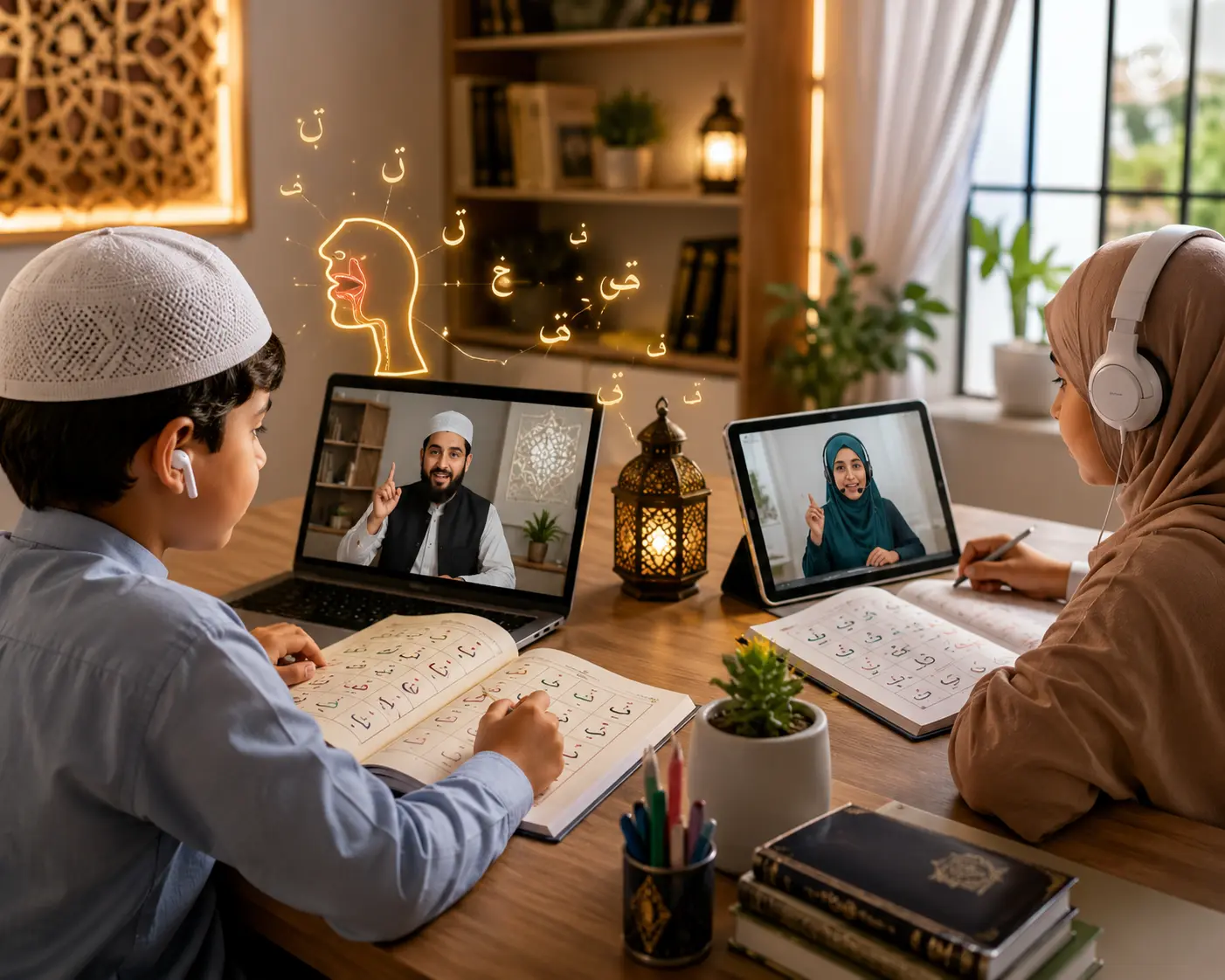
Noorani Qaida is the best starting point for kids and beginners to learn Quran reading. It teaches the Arabic alphabet, correct pronunciation, and basic Tajweed rules, helping learners recite the Quran accurately and confidently. Choosing online classes with qualified teachers, interactive lessons, and regular feedback makes learning easier, more engaging, and effective.
What is Noorani Qaida?
The Noorani Qaida is a book that teaches people the basics of the Arabic alphabet. It also teaches people how to form letters and words and the rules of Tajweed for reading the Quran. The Noorani Qaida was written by Sheikh Noor Muhammed Haqani. He was a known religious scholar. The Noorani Qaida has seventeen chapters that help people learn. These people include beginners and children and adults who’re new to this. The Noorani Qaida helps them learn the Quran and how to say the words correctly.
I have used the Noorani Qaida myself. I can say that it makes learning and teaching the Quran a lot easier. The Noorani Qaida is a useful book for people who want to learn the Quran.
Why Study Noorani Qaida Before Reciting the Quran?
It is always advisable for one to learn Noorani Qaida before proceeding to the Quran recitation as it will give them a solid base for Quranic recitation. Learners will gain a lot from the Noorani Qaida because it gives beginners a good base by giving them the knowledge about the Arabic letters, recognition, pronunciations, letter shapes, sounds, words, and alphabet.
Learners and students get prepared early enough by making them more comfortable in matters concerning Makharij, correct Arabic pronunciation, articulation points, and right sounds of Tajweed when reciting the Quran.
Tajweed and its importance
Tajweed deals with proper pronunciation, articulation, prosody, rhythm, phonetics, Arabic alphabets, and rhythmic recitation. Learners can understand and appreciate more about Quranic verses through Islamic teachings, instructions of Prophet Muhammad (PBUH), and authentic Hadith.
By learning tajweed with trained and experienced tutors with one-on-one learning, personalized lessons, and convenient scheduling on a reliable online learning platform, learners enhance their ability to pronounce correctly while developing their fluency, mindfulness, reflective thinking, self-awareness, and tranquil state of mind by meditating on the word of Allah and lowering anxiety and stress levels. Furthermore, it develops a profound spiritual relationship with Allah; ensures preservation of the oral tradition; promotes the preservation of the divine revelation and divine scripture from generation to generation; enhances unity among Muslims irrespective of their dialects and accent; develops knowledge of grammar and linguistic nuances and significance; and enables Muslims to beautify their voice with the Quran and come closer to their Creator and touch the hearts of believers.
Tajweed basics taught in Noorani Qaida
When you study Noorani Qaida you will learn the rules of Tajweed that make Quran reading sound nice and correct. First students learn the alphabet, which is also called Huroof-e-Tahajji and the different marks that are used like Harakat, which includes Fathah, Kasrah and Dammah. They also learn about long vowels and some special letters like Alif, Waw and Ya which are called Huroof-e-Maddah.
Students have to practice saying the letters correctly using their mouths, throats, tongues, and teeth. This helps them say the words clearly and understand the Quran better. They learn about Tanween, which includes Fathatain, Kasratain and Dammatain and about Sukoon and Shaddah. They also learn the articulation points of the letters, known as Makhraj, which show where each letter should be pronounced.
Then students learn some rules of Tajweed, like Ikhfa, which means hiding the sound and Idgham with and without Ghunnah. They also learn about Iqlab, which means changing the sound and Idhar. They study the rules for saying Noon Sakinah and Noon Mushaddadah and Meem Mushaddadah. They learn about Ikhfa Shafawi, Idgham Shafawi and Idhar Shafawi and the difference between Laam Qamariyah and Laam Shamsiyah. They even learn how to say Raa and Baa.
Students also learn about Madd, which means prolonging or extending a sound during Quran recitation. They study types of Madd like Madd Asli, Madd Far’i, Madd Muttasil, Madd Munfasil and Madd Laazim. They learn about Hamzah and its different types like Hamzatul Wasl and Hamzatul Qat’. They find out about Qalqalah, which’s a special way of saying some letters and Sifaat al-Huruf, which is about the characteristics of the letters. They learn about Tafkhim and Tarqeeq which’re ways of saying the letters.
Benefits of Learning Noorani Qaida with Tajweed
1- Earns Spiritual Rewards
Every effort in reciting the Book of Allah brings good deeds, ten-fold reward, and greater spiritual reward. The teachings of Prophet Muhammad (PBUH), Sahih Muslim, Sahih al-Bukhari, At-Tirmidhi, and Riyad as-Salihin remind us that sincere learners may receive a double reward, be among the honorable scribes and obedient angels, while the Quran becomes an intercessor for its reciters on the Day of Judgment.
2- Preserves Authentic Recitation
Learning with a qualified teacher is instrumental in preserving the authenticity of Quranic recitation through proper Tajweed and the Hafs ‘an ‘Asim recitation. The system of Ijazah ensures that an authorized teacher transmits this knowledge through an authenticated scholarly chain, beginning with the Prophet ﷺ, then the Sahabah, followed by the Tabi’in, and continuing through successive generations of scholars. This unbroken chain helps preserve the accuracy of Quranic recitation. Unlike audio recordings, a qualified teacher can identify and correct recitation mistakes immediately.
3- Deepens Understanding of the Quran
Practice of Tajweed will improve their skills regarding Ghunnah, Qalqalah, articulating the sounds of Arabic letters correctly, and pronouncing Quranic verses properly. Regular practice will help them to memorize, meditate on the meanings of the Quranic verses, and understand the Arabic language better, along with knowing its meanings. As they acquire a good voice tone and learn how to adorn Quranic recitation, they get more knowledge about the Quran, understand the revelation of the Quran in every Ayah and Surah, strive to please Allah (SWT), and purify their souls by His words.
What to look for in online tajweed classes for kids and beginners
1- Focus on Practical Learning
The best programs prioritize 1:1 classes, one-to-one learning, practical recitation, and simple theory instead of only memorizing theoretical rules. Regular immediate correction, feedback, and a continuous loop help students improve every lesson.
2- Track Student Progress
Reliable academies provide recorded lessons for student review, progress reporting, session recordings, parent feedback calls, milestone certifications, exit exams, rule mastery, error-free recitation, and assessment of the practical application of rules.
3- Use Interactive Teaching Tools
Before joining, ask for a free trial class or trial lesson to experience the teaching style and learning environment. Quality classes also include interactive teaching tools, digital interactive whiteboards, gamified progress tracking, educational quizzes, audio-visual aids, and review games to keep children engaged.
4- Look for Flexibility and Safety
Check if the academy offers male and female teacher options, along with time zone support for the UK, USA, North America, Europe, and Australia. Flexible morning classes, evening classes, and weekend classes, combined with private platforms, background checks, child safety, the ability to observe sessions or record sessions, and active parental involvement, create a secure and effective online learning experience.
Conclusion
Every great Quran learning journey starts with a foundation, and Noorani Qaida provides that foundation. I have seen beginners learn step by step. Learning with Tajweed improves Quran pronunciation. It also builds confidence and a love for reciting the Quran. Online Tajweed classes with teachers make learning fun for kids and beginners. It does not matter where they live. Learners can recite the Quran accurately with patience and practice. They understand the Quran’s message and feel closer to Allah.